There’s a chill in the air… autumn is just around the corner! These DIY colour-block pine cones are really easy to make. They work as really cool coffee table decor for the new season!
Ideas For DIY
There’s a chill in the air… autumn is just around the corner! These DIY colour-block pine cones are really easy to make. They work as really cool coffee table decor for the new season!
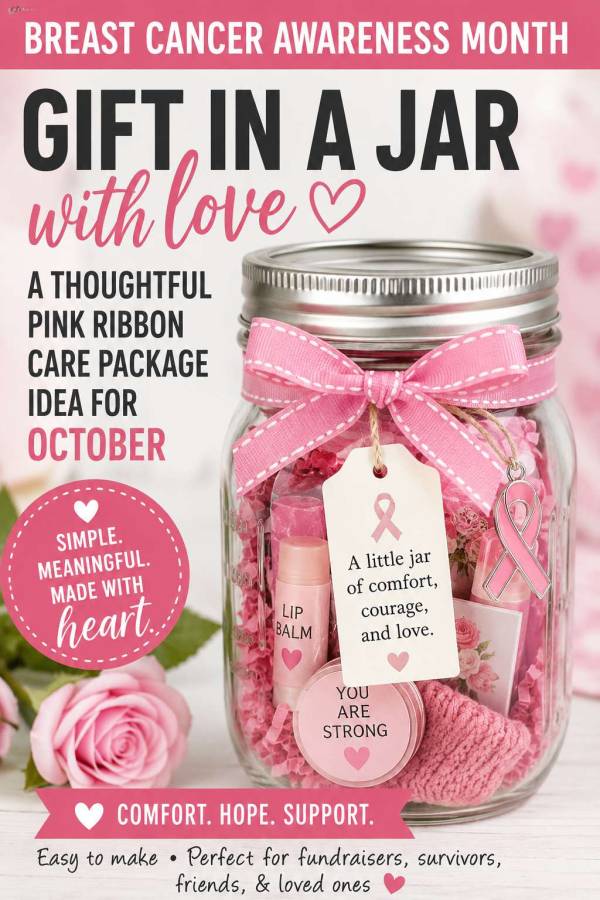
October is Breast Cancer Awareness Month, and every year it reminds us that small gestures can carry a lot of love. Not every support gift needs to be grand, expensive, or wrapped like it came from a boutique gift shop. Sometimes the most meaningful thing you can give is a simple jar filled with comfort, encouragement, and a little pink-ribbon kindness.
This Breast Cancer Awareness Month gift in a jar is a thoughtful handmade project for a friend, family member, survivor, chemo patient, fundraiser, workplace awareness event, church group, or community donation table. It is easy to make, budget-friendly, and personal without being complicated.
And let’s be honest, we crafters do love a good jar project. We save jars “just in case,” and then suddenly October rolls around and our little cupboard of glass jars looks less like clutter and more like excellent planning.
If you are looking for more handmade ways to support Breast Cancer Awareness Month, you might also like our collection of DIY Breast Cancer Awareness projects, which includes pink ribbon crafts, support gifts, awareness ideas, and handmade projects you can make for someone you love.
A gift in a jar works beautifully because it is small, practical, and easy to personalise. You can make one for a close friend going through treatment, create several for a hospital donation drive, or make mini versions for a Breast Cancer Awareness Month fundraising table.
Unlike a large hamper, a jar does not feel overwhelming. It can be filled with simple comfort items such as lip balm, herbal tea, hand cream, soft socks, mints, or a handwritten note. It is the kind of gift that says, “I am thinking of you,” without needing to find the perfect words.
October can be an emotional month for many people. Some are celebrating survival. Some are remembering someone they love. Some are newly diagnosed and still trying to find their footing. This project can be made cheerful, gentle, sentimental, practical, or quiet depending on who you are making it for.
To make your own Breast Cancer Awareness Month care package jar, you will need:
If you are making these jars in bulk for October fundraising tables or donation gifts, it is worth buying supplies in larger packs. Amazon is handy for bulk mason jars, pink ribbon, lip balms, organza bags, and small self-care items. Etsy is also a lovely place to find printable pink ribbon tags, handmade awareness charms, and breast cancer awareness stickers if you want the finished jar to look extra special without designing everything from scratch.
The best items for a breast cancer support jar are useful, comforting, and easy to enjoy. Try not to fill the jar with random pink things just because they match. Pink is lovely, but practical pink is even better.
Here are some thoughtful filler ideas:
A small handmade item makes the jar even more personal. This Breast Cancer Awareness resin and Cricut keychain would be perfect tied around the outside of the jar or tucked inside as a keepsake.
One practical tip: avoid heavily scented products unless you know the person loves them. During treatment, strong smells can be unpleasant, even if the product itself is beautiful. Unscented or gently scented items are usually a safer and more thoughtful choice.
Start by washing and drying your jar completely. If you are using a recycled jar, remove the old label and sticky residue. Warm soapy water, rubbing alcohol, or a little eucalyptus oil usually helps lift stubborn glue.
Cut a strip of pink scrapbook paper or cardstock wide enough to wrap around the middle of the jar. Secure it at the back with double-sided tape or craft glue. This creates a pretty paper band and gives the jar an instant October awareness look.
Wrap pink ribbon around the jar and tie it into a bow at the front. You can use satin ribbon for a clean look, organza ribbon for something soft and feminine, or layer lace over pink ribbon for a handmade vintage feel.
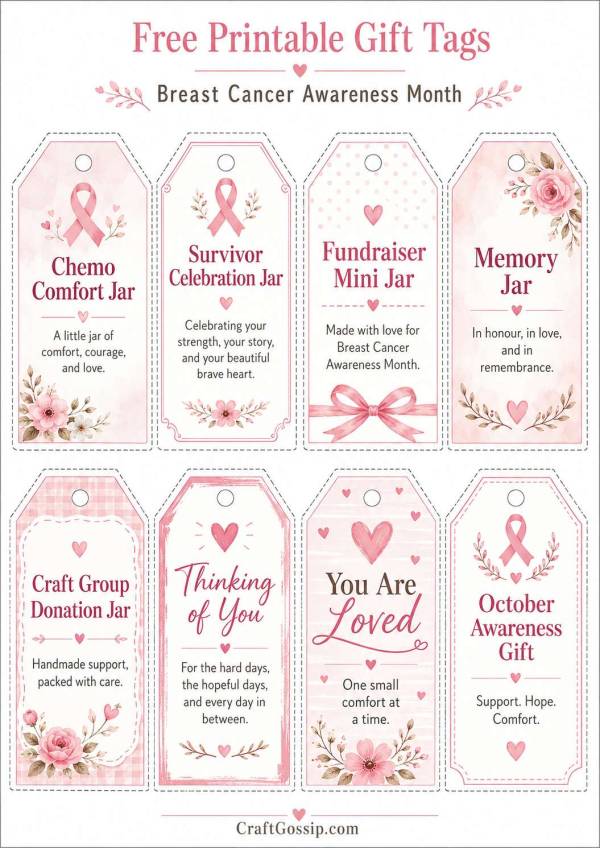
Next, cut a small tag from white cardstock. Write a message by hand or print one using your computer. Punch a hole at the top of the tag and tie it around the neck of the jar with twine or ribbon.
Fill the jar with your chosen comfort items. Place larger items at the back and smaller items toward the front so the contents look pretty through the glass. If you are using tea bags, sweets, or wrapped items, soft pink, white, gold, or pastel packaging helps the jar look coordinated.
Add the lid, finish with one final bow, and your Breast Cancer Awareness Month gift in a jar is ready to give.
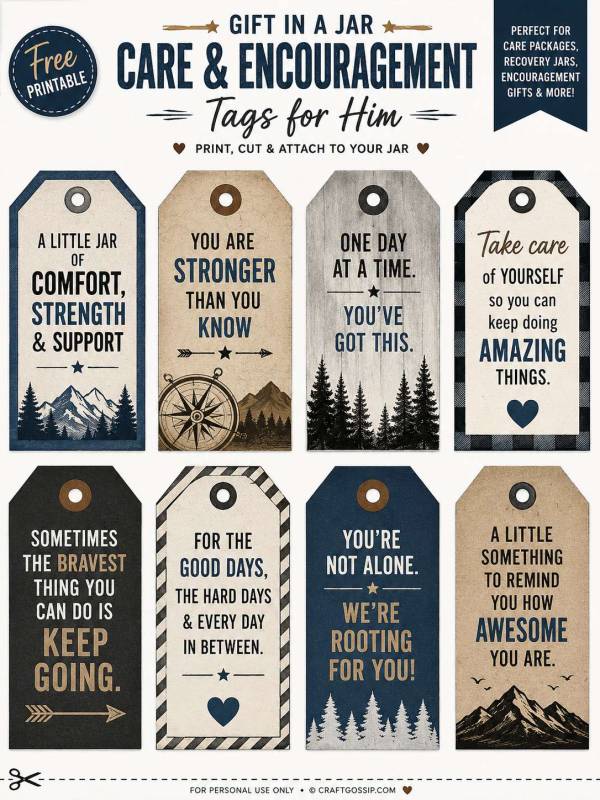
You can keep the wording simple and heartfelt. Not everyone connects with bold “fighter” or “warrior” phrases, so choose wording that feels right for the person receiving the gift.
Here are a few tag ideas:
For a survivor celebration jar, you might write:
Celebrating your strength, your story, and your beautiful brave heart.
For a memory jar, you might write:
In honour, in love, and in remembrance.
Fill the jar with lip balm, unscented hand cream, ginger sweets, herbal tea, pocket tissues, and soft socks. You could also add a small cotton washcloth or a handwritten note. If you knit or crochet, pairing the jar with a handmade hat can make the gift even more useful.
For knitters, our One Ball Chemo Cap knitting pattern is a thoughtful project that only uses one ball of yarn. We also have a Rolled Brim Chemo Cap pattern that is ideal for charity knitting groups and donation projects.
Use brighter pink ribbon, pretty paper, chocolates, a candle, a pink ribbon pin, and a handwritten note. This version is lovely for celebrating treatment milestones, remission anniversaries, or simply honouring someone’s journey.
If you want to make a larger handmade gift, this Breast Cancer Pink Ribbon Hope quilt pattern would be a beautiful project to pair with a care jar.
For October fundraising events, make smaller jars with wrapped sweets, a pink ribbon tag, and a simple awareness message. These are great for school events, workplace morning teas, craft stalls, church groups, and community awareness tables.
You could also add a small reminder card encouraging people to book health checks or support a local breast cancer charity. A tiny handmade gift can still carry an important message.
For a remembrance gift, use soft blush, white, cream, or pale pink rather than bright pink. Add a small candle, photo charm, written memory, or gentle keepsake. This version is especially meaningful for someone who is grieving during Breast Cancer Awareness Month.
Our Breast Cancer Survivor or Memory Snowflake craft is another sweet handmade keepsake that can be used for remembrance, awareness trees, or October display projects.
If your craft group wants to make several jars to donate, keep the contents practical and budget-friendly. Lip balm, tissues, tea bags, mints, and encouragement cards are easy to buy in bulk and simple to pack. Set up an assembly line with jars, ribbons, tags, and fillers, and you will have a table full of thoughtful gifts in no time.
For another useful October awareness make, these Awareness Ribbon Coasters are a lovely project that can be made for breast cancer awareness or adapted for other causes by changing the ribbon colour.
It is worth being a little careful with what you place inside the jar. Avoid strongly scented lotions, perfumes, or candles unless you know the recipient enjoys them. Avoid medical items unless specifically requested. Be cautious with food, as treatment can affect appetite and taste.
Try not to make the gift feel too jokey unless you know the person’s humour very well. October is an important awareness month, but it can also be a tender time for many families. Gentle, practical, and heartfelt is usually the safest path.
And please do not feel as though the jar needs to be packed until the lid barely closes. A few useful items and a sincere note are far better than a jar crammed full of things that will never be used.
This Breast Cancer Awareness Month gift in a jar is simple, affordable, and deeply personal. It can be made in under 30 minutes, but it carries a message that lasts much longer.
Whether you are making one for a friend going through treatment, a survivor, a fundraiser, a donation drive, or someone remembering a loved one this October, this little pink ribbon jar is a beautiful way to show support.
Handmade gifts do not need to be complicated to matter. Sometimes a jar filled with comfort, kindness, and a handwritten note is exactly enough.