Winterizing the garden is one of those jobs that sounds far more dramatic than it really is. You do not need a clipboard, a degree in horticulture, or a shed full of expensive gadgets. You just need a little time, a sensible plan, and perhaps the willingness to get dirt under your nails one more time before the cold weather settles in.
If your garden has looked a bit tired by the end of the growing season, you are not alone. By late autumn, most of us are dealing with floppy plants, forgotten pots, half-dead herbs, muddy corners, and that one tomato plant we were absolutely going to pull out three weeks ago. Winter garden preparation is not about making everything look perfect. It is about protecting your soil, saving your plants where you can, preventing pests and disease, and giving yourself a much easier start when spring gardening season rolls around.
Here is a practical, beginner-friendly guide to how to winterize your garden, including what to cut back, what to leave alone, how to protect tender plants, and how to prepare your vegetable beds, flower beds, containers, lawns, tools, and garden soil for winter.
Why Winterizing Your Garden Matters
A well-prepared winter garden is not just tidier. It is healthier.
Taking the time to winterize your garden helps:
- protect perennials from frost damage
- reduce pests and plant diseases
- improve soil health over winter
- prevent containers from cracking
- keep weeds from taking over
- protect garden tools and irrigation systems
- make spring planting much easier
Think of it as tucking the garden in for a long nap. You are not closing the book on the growing season. You are setting up the next chapter.
Start With A General Garden Clean-Up
Before you do anything fancy, walk around the garden with a bucket, gloves, pruners, and a little bit of patience.
Remove any dead annuals, diseased foliage, fallen fruit, rotting vegetables, and plant debris that could attract pests over winter. Old tomato vines, squash leaves, bean plants, and mildew-covered foliage are best removed rather than left to break down in place.
Healthy plant material can go into your compost pile, but anything that looks diseased, moldy, or pest-infested should go in the bin rather than the compost. I know, it feels wasteful, but composting diseased material can sometimes mean you are lovingly saving trouble for yourself next year. Ask me how I know.
If you enjoy seasonal garden projects, this is also a good time to collect natural materials for homemade decorations. Dried seed heads, bare branches, pinecones, seed pods, and evergreen cuttings can all be used for easy DIY winter wreaths, rustic table decorations, and handmade Christmas craft projects.
What To Cut Back Before Winter
Not every plant needs to be cut down to the ground. In fact, leaving some plants standing can help protect wildlife, add winter interest, and provide seed heads for birds.
Cut back plants that are:
- diseased or pest-damaged
- mushy or collapsed
- prone to mildew
- likely to rot in wet winter weather
- annuals that have finished their life cycle
Common plants to cut back include old vegetable plants, spent annual flowers, soft herbs like basil, and perennials with diseased foliage.
For perennial flowers, trim back dead stems to a few inches above the soil once the plant has fully died back. This makes the garden look neater and reduces overwintering pest hiding spots.
What To Leave Standing In The Winter Garden
Some plants are worth leaving alone until spring.
Leave standing:
- ornamental grasses
- seed heads from coneflowers, rudbeckia, and sunflowers
- sturdy perennial stems
- plants that provide shelter for beneficial insects
- anything that adds winter structure
Birds love seed heads, and many beneficial insects overwinter in hollow stems and leaf litter. A garden that is too perfectly cleaned can sometimes be less welcoming to the good little helpers we want back in spring.
A good compromise is to clean up the messy or diseased areas and leave a few wildlife-friendly corners. It still looks intentional, but you are not turning the garden into a sterile little museum.
Weed Before Winter Sets In
I know. Nobody wants to hear this bit.
But autumn weeding is one of the best winter garden preparation jobs you can do. Weeds left in the garden over winter often come back stronger in spring, and some drop seeds before you have even remembered where you put your gardening gloves.
Pull weeds from vegetable beds, flower beds, gravel paths, around fruit trees, and along fence lines. Try to remove the roots rather than just snapping the tops off. If the soil is damp, this job is usually much easier.
Once the weeds are removed, cover bare soil with mulch, compost, straw, leaves, or another protective layer to stop new weeds from moving in.
Add Compost To Feed The Soil
Winter is a wonderful time to feed your garden soil.
After clearing and weeding your garden beds, spread a layer of compost over the soil. You do not need to dig it in aggressively. In most cases, you can simply lay compost over the top and let rain, worms, and soil life do the work for you.
Adding compost before winter helps:
- improve soil structure
- add nutrients
- increase worm activity
- protect bare soil
- support healthier spring planting
For vegetable gardens, raised beds, and flower borders, a layer of compost around 1–2 inches thick is a good place to start.
If you make your own compost, this is the moment where all those kitchen scraps and garden clippings start paying you back. Very satisfying, and slightly smug in the best possible way.
Mulch Garden Beds For Winter Protection
Mulch acts like a blanket for your soil and plant roots. It helps regulate soil temperature, reduces erosion, suppresses weeds, and protects tender perennials from harsh freeze-thaw cycles.
Good winter mulch options include:
- shredded leaves
- straw
- bark mulch
- pine needles
- compost
- wood chips
- sugar cane mulch
- hay, if seed-free
Spread mulch around perennials, shrubs, fruit trees, roses, and vegetable beds. Keep mulch a little away from plant crowns and tree trunks, as piling mulch directly against stems can encourage rot.
For cold-climate gardens, apply mulch after the ground has cooled but before deep freezing weather sets in. This helps keep soil temperatures more consistent rather than trapping too much warmth too early.
Protect Tender Plants From Frost
If you grow tender perennials, young shrubs, citrus trees, tropical plants, or frost-sensitive herbs, they may need extra protection.
Ways to protect plants from frost include:
- covering plants with frost cloth or garden fleece
- wrapping pots with hessian, burlap, or bubble wrap
- moving containers to a sheltered porch or garage
- grouping potted plants together for warmth
- adding mulch around root zones
- using cloches over small plants
- placing stakes before covering so fabric does not crush foliage
Avoid using plastic directly against leaves, as it can trap moisture and damage foliage. If you do use plastic in a pinch, make sure it is held above the plant and removed during the day.
For potted plants, remember that roots in containers get colder than roots in the ground. A plant that survives outdoors in a garden bed may struggle in a pot during winter.
Bring Delicate Potted Plants Indoors
Before the first frost, check your outdoor containers and decide what is worth saving.
Bring indoors:
- tender herbs
- tropical plants
- succulents that dislike cold wet weather
- small citrus trees
- pelargoniums and geraniums
- fuchsias
- begonias
- houseplants that spent summer outside
Before bringing pots indoors, inspect them for insects. Check under leaves, around stems, and on the soil surface. Nobody wants to lovingly bring in a pot of herbs and accidentally move an entire bug community into the kitchen.
Trim plants lightly, remove dead leaves, and place them in a bright spot indoors. Water less during winter, as many plants slow down and need less moisture.
Prepare Vegetable Garden Beds For Winter
The vegetable garden usually needs a proper end-of-season reset.
Remove old vegetable plants, especially tomatoes, peppers, cucumbers, squash, beans, and corn stalks. These can harbor pests and diseases if left in place.
Once cleared, you can prepare vegetable beds by:
- removing weeds
- adding compost
- covering soil with mulch
- planting a cover crop
- adding leaf mold or aged manure
- protecting raised beds from erosion
If you are not planting winter vegetables, do not leave the soil bare. Bare soil can compact, erode, lose nutrients, and become a lovely open invitation for weeds.
Plant A Winter Cover Crop
Cover crops are one of the best ways to improve vegetable garden soil over winter.
Common winter cover crops include:
- winter rye
- oats
- clover
- field peas
- vetch
- mustard
- broad beans
- lupins
Cover crops help prevent soil erosion, add organic matter, suppress weeds, and improve soil fertility. Some, like peas and clover, can also help fix nitrogen in the soil.
In spring, cover crops are usually cut down and dug in or left on the surface to break down before planting. It is a simple trick that makes you feel very organised, even if the rest of the shed looks like a seed packet explosion.
Harvest What You Can Before Frost
Before winter truly arrives, harvest anything that will not survive freezing weather.
Pick:
- green tomatoes
- pumpkins and squash
- herbs
- chillies
- beans
- tender greens
- root crops that may freeze
- remaining flowers for drying
Green tomatoes can ripen indoors, herbs can be dried or frozen, and many vegetables can be preserved. If you have a glut of herbs, chop them and freeze them in ice cube trays with olive oil or water for easy winter cooking.
Divide And Move Perennials
Autumn can be a good time to divide many perennials, especially if they have become crowded, woody, or less productive.
Plants that often benefit from dividing include:
- hostas
- daylilies
- irises
- ornamental grasses
- asters
- rudbeckia
- salvias
- hardy geraniums
Divide plants when the weather is cool and the soil is moist. Replant divisions, water them well, and mulch around them for winter protection.
This is also a good time to move plants that are in the wrong spot. You know the ones. The “small shrub” that turned into a beast. The flower that looked lovely on the tag but has been sulking in the shade for two years. Autumn is a forgiving time to reshuffle the garden.
Plant Spring Bulbs Before The Ground Freezes
Winterizing the garden is not only about cleaning up. It is also about planting ahead.
Autumn is the best time to plant many spring-flowering bulbs, including:
- tulips
- daffodils
- crocus
- hyacinths
- alliums
- snowdrops
- grape hyacinths
Plant bulbs before the ground freezes, following the depth instructions on the packet. As a rough guide, bulbs are often planted around two to three times as deep as the bulb is tall.
For a natural look, plant bulbs in clusters rather than stiff rows. Future-you in spring will be delighted, especially when you have completely forgotten you planted them.
Winterize Roses
Roses appreciate a little winter care, especially in colder climates.
To prepare roses for winter:
- remove fallen diseased leaves
- stop feeding late in the season
- prune only lightly before winter
- mound compost or soil around the base in cold areas
- add mulch over the root zone
- secure long canes so they do not whip around in strong winds
Major rose pruning is usually best left until late winter or early spring, depending on your climate. Before winter, focus on tidying, disease prevention, and root protection.
Protect Young Trees And Shrubs
Young trees and shrubs are more vulnerable to winter damage than established plants.
Protect them by:
- watering well before the ground freezes
- mulching around the root zone
- staking if needed
- wrapping trunks if sunscald or animal damage is a problem
- shielding evergreens from drying winds
- avoiding heavy pruning late in the season
Keep mulch spread in a wide ring, but not touching the trunk. The old “mulch volcano” look may be common, but it is not great for trees.
Clean And Store Garden Tools
Garden tools work hard all year, so give them a little attention before storing them for winter.
Clean soil from spades, forks, trowels, hoes, and pruners. Sharpen blades if needed, wipe metal parts with oil to prevent rust, and check handles for cracks.
Store tools somewhere dry and protected. If you have ever found a favorite pair of secateurs rusted shut in spring, you will understand why this step matters.
This is also a good moment to sort through your garden supplies, seed packets, plant labels, twine, gloves, and pots. Not glamorous, but deeply satisfying.
Drain Hoses And Irrigation Systems
Water left inside hoses, watering systems, or outdoor pipes can freeze and cause damage.
Before winter:
- disconnect garden hoses
- drain them fully
- store hoses indoors or in a shed
- drain irrigation lines if needed
- shut off outdoor taps where appropriate
- protect exposed pipes
- empty watering cans and sprayers
A frozen hose is one of those annoying little spring problems that is completely avoidable. Five minutes now can save money later.
Empty And Protect Garden Pots
Terracotta, ceramic, and some decorative pots can crack if they are left full of wet soil during freezing weather.
To winterize garden containers:
- empty pots that held annuals
- remove old roots and soil
- clean pots before storing
- turn pots upside down or store under cover
- raise outdoor pots on feet for drainage
- move fragile pots indoors or into a shed
If you are leaving hardy plants in pots outdoors, group containers together in a sheltered spot and wrap them if your winters are harsh.
Care For The Lawn Before Winter
A little autumn lawn care can make a difference when the grass wakes up again in spring.
Before winter:
- rake up heavy layers of leaves
- mow one last time, not too short
- aerate compacted areas
- overseed bare patches if suitable for your climate
- avoid walking on frozen grass
- clear debris that could smother the lawn
Do not leave thick wet leaves sitting on the lawn for weeks, as they can block light and encourage fungal problems. Add those leaves to compost, leaf mold, or use them as mulch.
Make Leaf Mold From Autumn Leaves
If you have lots of fallen leaves, do not think of them as garden mess. Think of them as free soil conditioner.
Leaf mold is made by letting leaves break down slowly over time. It is excellent for improving soil structure and adding organic matter.
To make leaf mold:
- collect fallen leaves
- shred them if possible
- place them in a wire bin, compost bay, or pierced bags
- keep them slightly moist
- let them break down over several months
Shredded leaves break down faster than whole leaves. You can run over dry leaves with a mower, which is oddly satisfying and much easier than bagging them by hand.
Prepare Wildlife-Friendly Garden Spaces
A winter garden does not have to be stripped bare. Leaving a few natural areas helps birds, bees, butterflies, and beneficial insects.
You can support garden wildlife by:
- leaving some seed heads standing
- keeping a small brush pile
- providing fresh water
- leaving hollow stems until spring
- planting winter berries
- avoiding chemical sprays
- adding evergreen shelter
A slightly imperfect garden is often a healthier garden. That is excellent news for those of us who were never going to achieve magazine-level neatness anyway.
Winter Greenhouse And Shed Jobs
If you have a greenhouse, potting shed, or garden storage area, winter is the perfect time to reset it.
Clean greenhouse glass or plastic so winter light can get through. Remove old plant material, wash seed trays and pots, sweep out debris, and check for pests.
In the shed, organise seeds, labels, plant ties, netting, and tools. Toss broken plastic pots, bundle stakes together, and store fertilizers safely.
This is also the time to make a little wish list for next year’s garden. Seeds, raised bed repairs, new gloves, a better watering wand, or perhaps that compost thermometer you convinced yourself was unnecessary but now absolutely need.
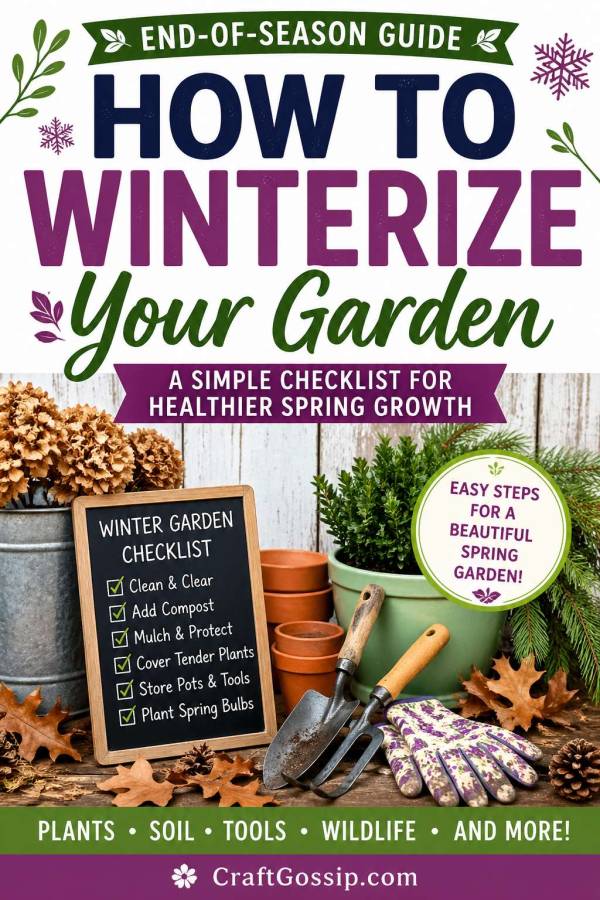
Winter Garden Checklist
Here is a simple checklist you can work through:
- Remove dead annuals and old vegetable plants
- Dispose of diseased foliage
- Weed garden beds and paths
- Add compost to vegetable and flower beds
- Mulch around perennials, shrubs, and trees
- Protect tender plants from frost
- Bring delicate potted plants indoors
- Drain hoses and irrigation systems
- Empty and store fragile pots
- Plant spring bulbs
- Divide crowded perennials
- Clean and sharpen garden tools
- Rake heavy leaves from lawns
- Make leaf mold or compost
- Leave some seed heads for birds
- Plan next year’s garden
You do not have to do it all in one day. Even tackling two or three jobs each weekend will make a big difference.
Common Winter Garden Mistakes To Avoid
Cutting Everything Back Too Early
Some plants still send energy back to their roots as the foliage fades. Wait until plants have naturally died back before cutting them down.
Leaving Diseased Plants In The Garden
Diseased tomato vines, mildew-covered squash leaves, and infected rose foliage should be removed, not composted.
Forgetting About Potted Plants
Containers dry out, freeze, crack, and expose roots to harsher conditions than garden beds. Give pots extra attention before winter.
Mulching Too Close To Stems
Mulch is wonderful, but not when piled against plant crowns or tree trunks. Leave a small gap to prevent rot.
Leaving Soil Bare
Bare soil is vulnerable to erosion, compaction, weed growth, and nutrient loss. Cover it with compost, mulch, leaves, straw, or a cover crop.
Helpful Supplies For Winterizing The Garden
You do not need much, but these garden supplies make winter preparation easier:
- good gardening gloves
- sharp secateurs or pruners
- garden fork or hand trowel
- compost
- mulch or straw
- frost cloth
- plant ties
- garden twine
- hose reel or storage tub
- tool oil
- sturdy buckets or trugs
If you are new to gardening, start with good gloves, sharp pruners, and a reliable garden fork. Those three will carry you through more jobs than most fancy gadgets.
More Helpful Garden And DIY Ideas
If you enjoy seasonal home and garden projects, you may also like browsing the garden ideas on CraftGossip for more practical outdoor inspiration. A few natural internal linking spots to add when publishing:
- Link to a DIY garden projects roundup for readers who want weekend garden ideas.
- Link to a composting or garden soil improvement article if you have one on the site.
- Link to a fall garden clean-up checklist or seasonal gardening guide.
- Link to a DIY plant markers or seed starting tutorial for spring planning.
- Link to a CraftBits recycled garden craft project for readers who like budget-friendly garden makes.
A Little Work Now Makes Spring So Much Easier
Winterizing the garden is one of those jobs that pays you back later. A few hours spent clearing, mulching, protecting, and feeding your soil can mean fewer weeds, healthier plants, better spring growth, and far less chaos when the warmer weather returns.
And honestly, there is something quite lovely about putting the garden to bed. The beds are tucked in, the tools are cleaned, the pots are stacked, and you get to spend winter dreaming about what you will plant next.
Because gardeners may pretend they are “done for the season,” but we all know the seed catalogues are already calling.