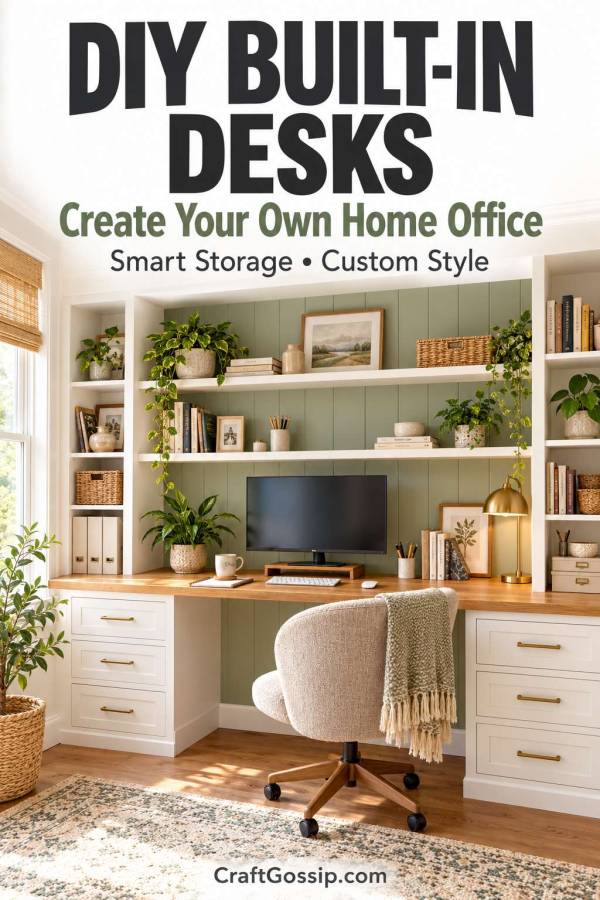
A desk that fits your room properly can make such a difference, especially when your “home office” is also the spare bedroom, craft room or that awkward corner where nothing quite fits. A DIY built-in desk lets you work with the space you have while adding storage for everything that usually ends up beside your keyboard.
I love the flexibility of a custom workspace. You can tuck a desk into an alcove, combine cabinets with a timber desktop or create a shared work area along one wall. Just remember to leave somewhere for your legs. It’s surprisingly easy to get carried away planning cupboards and forget that a person needs to sit there!
Building your own desk may save money, particularly if you can reuse suitable materials or furniture. However, the total depends on your chosen design, hardware, tools and finish. Price the whole project before committing, including those little extras that somehow become an entire shopping basket.
Below you’ll find DIY built-in desk ideas and related desk-building tutorials, followed by practical advice for planning your own workspace. Some projects create a fitted desk, while others offer freestanding designs you could use as inspiration. Follow the individual tutorial for construction details and assess any changes before adapting the design.
DIY Built-In Desk Ideas to Explore
1. Custom Built-In Desk from A Beautiful Mess
Start with A Beautiful Mess’s custom built-in desk tutorial if you’re looking for inspiration for a workspace designed around a particular room.
Before choosing your layout, make a list of what needs to fit on the desktop. A laptop and notebook need a different amount of space from two monitors, a printer and your latest craft project.
2. Small Writing Desk with a Drawer
Addicted 2 Decorating’s small DIY writing desk tutorial is a related furniture-building project rather than a dedicated built-in desk tutorial.
A compact writing desk is worth considering when a full wall of cabinetry would overwhelm the room. A drawer also gives pens, scissors and small supplies somewhere to live without covering the working surface.
This link is to Part 1, so check the subsequent instalments before planning the complete build.
3. Built-In Floating Desk
Explore DIY Passion’s built-in floating desk tutorial if you like the appearance of a desk with open space underneath.
The support system matters just as much as the desktop. Check the tutorial’s fixing requirements against your wall construction and intended load. Adding a heavy desktop or sewing machine can change what the structure needs to support.
4. Built-In Desk and Storage
Renovation Bay-Bee’s DIY built-in desk and storage project is a useful starting point when you want to plan the work area and storage together.
Think about the items you reach for every day. Keep those within easy reach, then use less accessible storage for spare supplies, paperwork and the things you only need occasionally.
5. Built-In Homework Desk
Real Homes’ built-in homework desk guide offers a family-workspace angle.
For a child’s desk, consider how the setup will adapt as they grow. Chair fit, usable legroom and accessible storage deserve as much attention as the colour scheme.
6. Upcycled Built-In Desk
For a reuse-focused approach, explore Sunny Side Design’s upcycled built-in desk project.
Before incorporating existing furniture, check its condition, dimensions and suitability for the job. Matching paint can bring different pieces together visually, but it won’t correct a height mismatch or strengthen a damaged cabinet.
7. Built-In Desk from Remodelando la Casa
Remodelando la Casa’s built-in desk project provides another fitted-workspace reference to compare with your room.
Look closely at how a proposed design meets the walls, skirting boards and surrounding furniture. Those finishing details can make a homemade desk feel thoughtfully integrated into the space.
8. DIY Built-In Desk from Stephanie Jane Cameron
Browse Stephanie Jane Cameron’s DIY built-in desk as another design reference before settling on your own plan.
I’d compare the available knee space, desktop depth and storage arrangement across several projects. It’s much easier to change your mind while looking at photographs than after cutting the timber.
9. Home Office Desk for Two
Domestic Blonde’s home office desk for two is worth exploring if you’re planning a shared workspace.
Allow each person enough room for their chair, equipment and everyday supplies. Plan socket access and cable routes for both positions, too. Sharing a desk is easier when nobody has to climb underneath it to charge their laptop.
10. Parson Tower Desk Plans
Ana White’s Parson Tower Desk plans offer a freestanding alternative to compare with a permanent fitted desk.
A movable design may be more practical if you expect to rearrange the room. If you adapt furniture plans into a built-in arrangement, reassess the support, fixing method and clearances rather than assuming the original construction will cover every change.
How to Plan Your DIY Built-In Desk
Measure the Room in Several Places
Measure the width at the front and back of the proposed desktop position. Check whether the walls are square and whether the floor is level.
Older rooms can be particularly generous with surprises. A desktop that fits perfectly at one point may leave a gap or catch against the wall somewhere else.
Include skirting boards, door swings, window trim and cabinet handles in your measurements.
Start with Your Chair and Working Position
Before buying cabinets, check the finished desktop height with the chair you intend to use.
Cabinet height plus desktop thickness determines the final working height. Kitchen base cabinets, for example, may create a surface that is too high for your preferred seated setup.
Allow room for your knees and for the chair to move freely. For a sewing station, include access to the foot pedal.
Choose the Right Desktop Depth
Your desktop needs enough depth for your equipment and the way you use it.
A shallow surface may suit occasional writing, but a monitor, keyboard and mouse need more room. A craft workspace may also need space for a cutting mat, tools and materials.
Mark the proposed footprint with painter’s tape before building. It’s a simple way to see whether the desk leaves enough room to move around.
Plan Desktop Support
A long desktop needs a support arrangement suited to its material, thickness, span and expected load.
Don’t assume two end cabinets will support any length of timber. Follow a suitable plan or obtain advice on the support required for your design.
If you’re browsing heavy-duty countertop support brackets, check the manufacturer’s installation requirements and load information. The wall structure and fixings must also suit the installation.
Keep Power Sockets Accessible
Decide where your computer, monitor, lamp and printer will plug in before fitting the desktop.
Avoid trapping sockets behind permanent cabinetry. Plan cable openings where needed, and leave access for replacing equipment.
Desk cable grommets can finish an opening neatly. Check the required hole size before drilling, and confirm what is beneath the surface.
Tools and Materials to Consider
Your chosen tutorial should determine the final supply list. Depending on the project, you may need:
- A suitable desktop or timber panels.
- Cabinets, drawer units or a purpose-built frame.
- Specified supports, brackets and fixings.
- A tape measure, square and level.
- A drill and appropriate bits.
- A suitable saw, or a timber-cutting service.
- Clamps.
- Sandpaper or a sander.
- Paint, stain or a suitable protective finish.
- Handles, trim and cable-management accessories.
A set of woodworking clamps can help hold components in position during assembly. Choose the size and type required by your project.
If you don’t own a saw, ask whether your timber supplier offers cutting services. You’ll still need accurate measurements and a plan for any fitting adjustments.
Materials: What Should You Use?
Plywood
Furniture-grade plywood is worth considering for some desktop and cabinet projects. Check the grade, thickness and support requirements, and plan how you’ll finish exposed edges.
Solid Timber
Solid timber offers natural character, but it also needs a design that allows for seasonal movement. Follow appropriate fixing guidance rather than fastening a wide timber top rigidly everywhere.
Ready-Made Worktops
A ready-made worktop can simplify part of the project. Check its dimensions, weight, finish and installation requirements before buying.
Existing Furniture
Reusing suitable cabinets or drawer units may reduce costs. Check that the pieces are sound and compatible with the desktop height you need.
Matching handles and paint can help create a cohesive appearance. An under-desk cable tray may also help keep the finished workspace tidy, provided its mounting method suits your desktop.
Built-In Desk Mistakes to Avoid
Planning Storage Before Legroom
Drawers are useful, but they should leave enough room to sit comfortably. Sketch the chair position before filling the layout with cupboards.
Forgetting the Desktop Thickness
A thicker top changes the final working height. Include it in your calculations from the beginning.
Assuming the Walls Are Straight
Measure carefully and expect that some fitting work may be needed. Avoid cutting a desktop to one wall-to-wall measurement without checking the full space.
Blocking Drawers or Doors
Check that cabinet drawers open without hitting the chair, neighbouring handles or room doors.
Rushing the Finish
Smooth the working surface and soften sharp edges where appropriate. Follow the finish manufacturer’s drying and curing instructions before putting equipment on top.
Buying Accessories Too Early
Choose your desk layout first, then buy storage baskets, lamps and organisers that fit it. Otherwise, you may end up designing the entire desk around a basket you bought because it was on sale. We’ve all been there.
Make the Workspace Suit Your Everyday Life
A built-in desk doesn’t need to look like a corporate office.
You might choose warm timber and painted cabinets, add a pinboard for project notes or include shelves for craft supplies.